
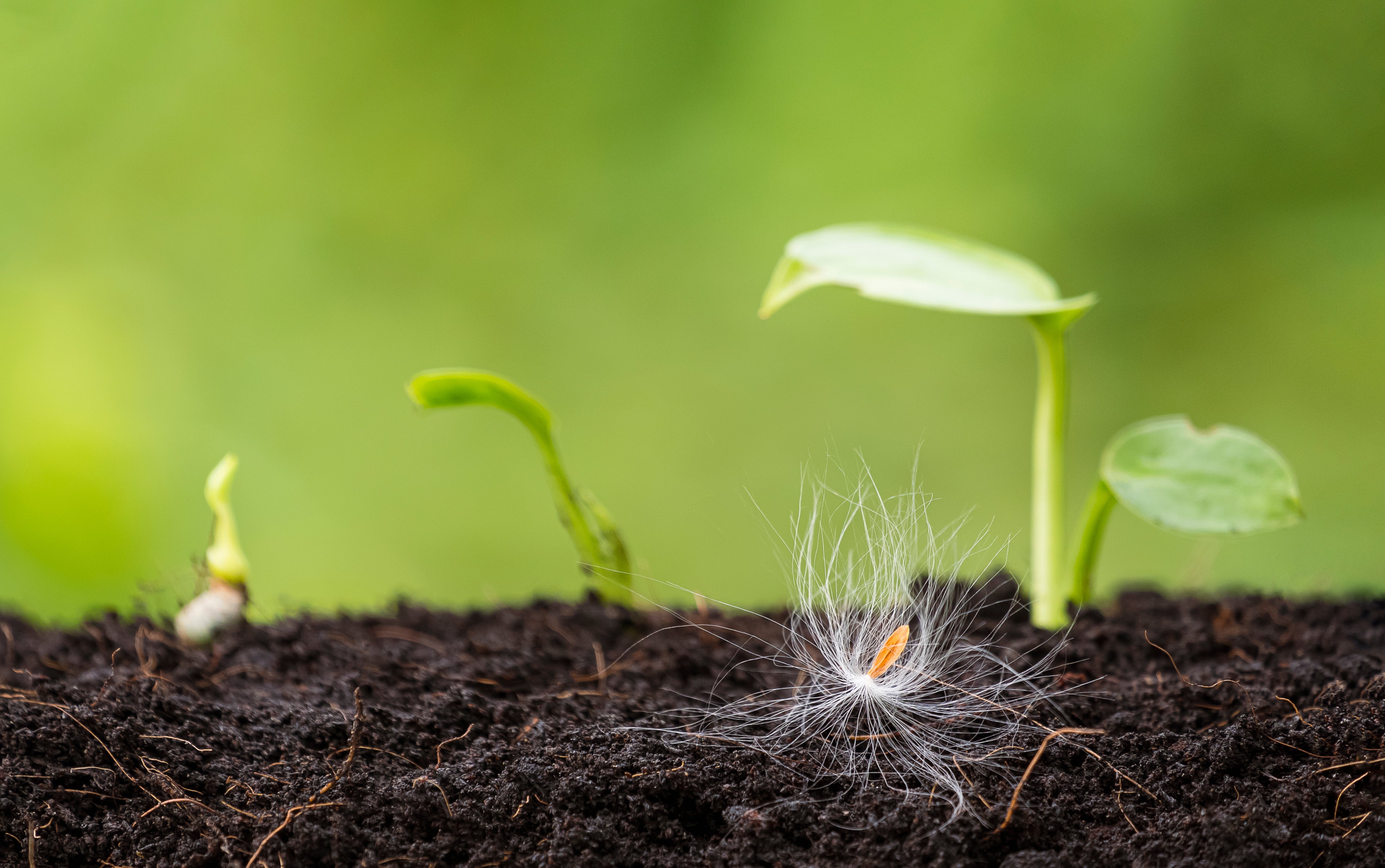
Biology doesn't lie. Yeast doesn't ferment faster because it believes in something. Seeds don't germinate at twice the rate because of the placebo effect. When you change the water and the organism changes with it — something real happened to that water.
In Part One we covered the story behind this research — what structured water is, why the scientific interest in it goes back decades, and what the Bio-Well Element device detected when it measured control versus magnetically treated water. The differences were statistically significant, reproducible across 100 samples, and visible in the discharge patterns themselves.
But physical measurements of water are one thing. What really tells you whether the change in water matters is what happens when a living system encounters it. The researchers running this 2026 study understood that — so alongside the Bio-Well measurements, they ran a series of biological experiments designed to be simple, observable, and impossible to misread.
What they found was not subtle.
The Seed Experiments
Four species were chosen — oat, wheat, sunflower, and watercress. Different biology, different seed structure, different germination rates. If the effect of treated water was real and not specific to one plant type, you'd expect to see it across all four. If it was an artifact, the pattern would be inconsistent.
Seeds were placed in Petri dishes with either 20ml of control water or 20ml of treated water, then covered to create a greenhouse effect. Identical conditions in every other respect. The first measurement came at three days.
Every species. Every one. Root lengths between 71% and 150% longer in treated water after just three days. The consistency across four biologically distinct plants is the signal worth holding onto — this isn't a quirk of one species' sensitivity. It's a broad biological response to something that changed in the water itself.
The sprout length data — measured at a later stage of development — told a similar story.
The numbers tell part of the story. The observations tell the rest. Seeds in treated water imbibed — absorbed the water — faster than controls. They gained more weight and volume. When the experiment was run without adding additional water, the treated-water seeds consumed their entire supply and began to dry out. The control seeds still had water left. The treated-water plants were drawing on it more aggressively, growing more quickly, metabolizing more actively.
A Detail That Didn't Make the Tables
In the watercress experiment, the "green cap" of control seeds began to rot on day nine. In the treated-water group: no rot. The treated-water environment was not just accelerating growth — it appeared to be maintaining a healthier growing condition over time. The researchers noted this without overstating it. We'll follow their lead.
The wheat sprout observations added one more nuance: treated water didn't simply accelerate everything uniformly. In the first three to five days, wheat growth actually showed a slight slowdown compared to control — and then a sharp acceleration. As if the treated water was triggering a different developmental program rather than simply speeding up the existing one.
The Yeast Experiment
Yeast is a useful test organism because fermentation is quantifiable, fast, and sensitive to the quality of its aqueous environment. Four grams of dry yeast and eight grams of sugar were added to 20ml of control or treated water. The tubes were left to ferment for four hours.
It's worth sitting with what that number represents. This isn't a marginal improvement — 5% more fermentation, within the noise. It's more than double. The yeast were metabolizing at a fundamentally different rate, driven entirely by the molecular state of the water they were living in.
And then — as covered in Part One — a container of untreated water was placed next to the treated water for one hour. The subsequent fermentation reached 20–24 cm. The proximity effect appeared here too, in a completely different experimental system.
The Bloodworm Experiment
The most visceral experiment in the paper. Live bloodworms — genus Glycera — were placed in equal amounts of control and treated water and not fed. The question was simply: do they survive longer in treated water?
On day four, the control worms were essentially gone. The treated-water worms were still swimming actively enough to be eating. On day seven — when every single control worm had died — up to 57% of the treated-water population was still alive.
These are organisms that had no food source. The only variable was the water. The treated water was sustaining life in conditions where chemically identical but untreated water could not.
The researchers were transparent about repeatability: 73% stability across experimental runs. Temperature and season influenced the results. This is the kind of methodological honesty that makes a study more trustworthy, not less — they're not claiming perfect reproducibility under all conditions. They're reporting what they observed, acknowledging the variables they couldn't fully control, and publishing the data anyway because the signal was too strong to ignore.
What Three Experiments Are Telling Us
Seeds. Yeast. Bloodworms. Three different biological systems. Three different experimental designs. Three different ways of asking the same question: does this water behave differently in living things?
The answer across all three was yes — with statistical significance, consistent direction, and observable outcomes that went well beyond marginal differences. This is not the profile of instrument error or random variation. It's the profile of a real biological effect traceable to a change in the water.
The Numbers Across All Three Experiments
150%
Max germination increase (oat, 3 days)
2.5×
Yeast fermentation rate
57%
Bloodworm survival on day 7 vs 0% control
The researchers' own hypothesis is that the pulsed magnetic field treatment restructures water into systems of coherent domains — a concept with theoretical backing in quantum electrodynamic models of water developed by Del Giudice and colleagues. The Bio-Well Element discharge patterns — specifically the emergence of radially symmetric figures in treated water — are consistent with this interpretation. More ordered structure produces more coherent, symmetrical photonic output.
The mechanism is still being worked out. The effects are not.
Research reference: Nefedov VI, Grabova IA, Lindinger MI, Korotkov KG. Evaluation of the effect of water treated with a magnetic field on the selected technical and biological systems. J Appl Biotechnol Bioeng. 2026;13(1):29–33. DOI: 10.15406/jabb.2026.13.00414. Funding disclosed: Defiance Brands, Inc., Nashville, TN, USA. This article is for educational purposes only and does not constitute medical advice.


Share:
Water Has Memory. We Have Proof.
The Device That Can See What Changed