

Biofield Science · Energy Healing · Research
What Is Biofield Therapy?
The Science You Haven't Heard Yet
Formally defined by the US National Institutes of Health. Backed by published research. Finally explainable.
The human body generates electrical fields, magnetic fields, photon emissions, and biochemical signals that extend beyond the skin surface. The study of these fields — how they form, what they encode, how they can be influenced — is biofield science. It has a formal NIH definition, a growing body of peer-reviewed research, and a measurement problem that one instrument is now beginning to solve.
Most people first encounter the word "biofield" in a wellness context — attached to Reiki, healing touch, or energy medicine — and assume it belongs to alternative culture, not hard science. They're wrong. The biofield has a formal NIH definition, a dedicated research programme, and a peer-reviewed journal. What it doesn't have yet is widespread public understanding of what the science actually says — and what it doesn't.
This guide covers the history of the concept, its formal scientific definition, the mechanisms that may underlie biofield therapies, what the clinical evidence shows, and how Bio-Well's GDV technology functions as the primary instrument for biofield measurement in research settings today.
The Official Definition — From the US National Institutes of Health
In 1992, an expert committee convened by the Office of Alternative Medicine at the US National Institutes of Health gave the biofield its first formal scientific definition. It was not invented by wellness culture. It was identified by researchers as a term needed to describe something real — and measurable — about living organisms.
Note what the definition does and doesn't say. It says "not necessarily electromagnetic" — meaning the committee acknowledged that some aspects of the biofield may not fit existing electromagnetic frameworks. It doesn't say it's supernatural. It says: living bodies generate fields that affect the body. That is a straightforwardly physical claim, and the research since 1992 has been working to characterise those fields with increasing precision.
In 2015, researchers Rubik, Muehsam, Hammerschlag, and Jain published a landmark paper in Global Advances in Health and Medicine providing a comprehensive framework for biofield science — covering history, terminology, and the physical basis of known biofield phenomena.1 The same year, Hammerschlag et al. published a companion paper proposing biofield physiology as an emerging scientific discipline in its own right.2
The National Cancer Institute (NCI) formally classifies biofield therapies as a category of complementary and alternative medicine, defining them alongside electromagnetic therapies as part of its energy therapy framework. Biofield therapy is in the NCI dictionary.3 This is not fringe. It is officially categorised medical research.
A Century of Discovery — The Research Trail Nobody Told You About
The idea that living organisms generate fields beyond their physical boundaries is not new. What's new is the instrumentation to study them rigorously. Here is the scientific lineage:
Gurwitsch discovers mitogenetic radiation
Ukrainian histologist Alexander Gurwitsch, PhD, documents ultraviolet light emission from dividing cells in onion root — and coins the term "morphogenetic field" to describe the coherent process guiding embryonic development. This is the first documented evidence of biophotonic emission from living tissue.1
Burr maps the electrical body
Yale anatomist Harold Saxton Burr demonstrates that all living organisms maintain stable electrical potential fields — "L-fields" (life fields) — that precede and guide physical development. His measurements of salamander eggs and human ovarian cycles were replicated and are accepted in mainstream bioelectricity research.4
Popp quantifies the biophoton field
Fritz-Albert Popp, German biophysicist, develops sensitive photomultiplier technology to characterise biophoton emission from living cells with rigour. His work establishes that the emission is coherent — not random thermal radiation — and appears to function in intercellular communication. Biophoton research becomes a legitimate field of biophysics.1
NIH officially defines the biofield
The US National Institutes of Health convenes an expert committee that produces the first formal scientific definition. "Biofield" becomes the umbrella term for endogenous fields generated by living organisms — electromagnetic, photonic, acoustic, and potentially others not yet characterised.1
Korotkov develops Gas Discharge Visualization
Prof. Konstantin Korotkov at St. Petersburg State Technical University creates the first practical instrument specifically designed for biofield measurement — GDV (Gas Discharge Visualization). By stimulating photon and electron emission from fingertips and analysing the resulting discharge patterns, it provides a reproducible, quantifiable window into the body's energy state. Over 200 published studies follow.
Landmark framework papers published
A special issue of Global Advances in Health and Medicine publishes the most comprehensive scientific framework for biofield science to date — covering history, terminology, physiology, biofield devices, and barriers to mainstream integration. Rubik, Muehsam, Hammerschlag, and Jain lead a team of researchers across multiple institutions.1,2,5
Biophysics review advances the mechanism
Sá and Pignataro (2025) publish a narrative review in Explore: The Journal of Science & Healing (Sciencedirect) synthesising evidence that ultraweak photon emissions (UPEs) from living cells may function as biofield mediators — encoding and transmitting signals that influence cellular behaviour, pain, inflammation, and immune function.6
What Biofield Therapy Actually Involves
"Biofield therapy" is not one thing. It is a category of interventions that work — by hypothesis — by influencing the body's endogenous energy fields rather than through mechanical, chemical, or conventional electromagnetic means. The National Cancer Institute classifies them separately from electromagnetic therapies precisely because their mechanism may involve fields not currently measurable by standard instruments.
The NCI defines biofield therapy as: "A form of complementary and alternative medicine based on the belief that a vital energy flows through the human body. The goal of Energy Therapy is to balance the flow of energy in the patient. It is used to reduce stress and anxiety and promote well-being."3
Therapeutic Touch
Developed by nursing academics Dolores Krieger and Dora Kunz in the 1970s. Practitioner intentionally directs their own biofield to interact with the patient's. Over 100 peer-reviewed studies published. Widely studied in hospital settings, pain management, and anxiety reduction.
Systematic reviews availableReiki
Japanese energy healing practice involving gentle hand placement or hovering, with intention to channel "universal energy" through the practitioner to the recipient. Studied in hospital oncology, palliative care, and anxiety settings. Multiple RCTs published on anxiety and pain outcomes.
Multiple RCTs publishedExternal Qigong (EQT)
Chinese tradition involving a trained practitioner directing qi (life energy) externally to a patient. One of the most rigorously studied biofield therapies in China, with over 30 years of laboratory research. A 2004 analytic review by Chen covered dozens of Chinese studies, finding measurable physiological effects at distances.7
Extensive Chinese RCT baseHealing Touch
Systematised energy-based therapy developed by nurse Janet Mentgen. Internationally taught and credentialed. Used in oncology, cardiac, and surgical settings. The Healing Touch Program has been adopted in hospitals in the US, Canada, and Europe, with an expanding evidence base for pain and anxiety outcomes.
Growing clinical evidenceHere is the insight that unlocks the whole field: your body doesn't just have a nervous system and a cardiovascular system. It also has an information field — built from its electrical activity, its photon emissions, its acoustic vibrations, and possibly other signals not yet fully characterised. Biofield therapy works (in theory, and increasingly in evidence) by interacting with that information field. The difficulty has never been the concept. It's been the measurement.
What Physics Says About How Biofields Work
Biofield research doesn't require invoking anything outside established physics. The body produces multiple types of fields and signals that are well-characterised. The question biofield science asks is: what are they doing beyond their obvious local function? A 2025 narrative review by Sá and Pignataro in Explore (Sciencedirect) provides the most current synthesis of proposed mechanisms.6
What Does the Clinical Research Actually Show?
The 2025 Sá & Pignataro review synthesised clinical and preclinical evidence across biofield and electromagnetic therapies.6 Their findings — along with the broader literature — point to consistent signals in several outcome areas:
| Outcome Area | Therapies studied | Evidence type | Signal strength |
|---|---|---|---|
| Pain reduction | Reiki, Therapeutic Touch, Healing Touch, EQT | Multiple RCTs, systematic reviews | Consistent moderate effect |
| Anxiety & stress | Reiki, Therapeutic Touch, Healing Touch | RCTs including cancer populations | Consistent moderate effect |
| Immune function | EQT, Therapeutic Touch | Preclinical and small clinical trials | Promising, more evidence needed |
| Wound healing | Therapeutic Touch, Healing Touch | Controlled studies, in vitro evidence | Early positive signals |
| Cancer QoL & side effects | Reiki, Healing Touch, Therapeutic Touch | Hospital-based RCTs | Consistent wellbeing improvement |
| GDV measurable changes | Yoga, meditation, acupuncture, osteopathy, massage | 200+ published studies using Bio-Well GDV | Statistically significant pre/post changes |
The clinical evidence shows consistent signals that something is happening — particularly for pain, anxiety, and wellbeing in hospital settings. What it does not yet provide is a definitive mechanistic explanation for how practitioner-directed biofield interventions produce these effects at a distance. That is the frontier. A 2025 international survey of 783 neurology authors found that 51.8% disagreed that biofield therapies are effective — reflecting the gap between evidence and mainstream clinical acceptance that still needs to be bridged.6 Honest science acknowledges both the signals and the uncertainty.
Why Biofield Research Needed a New Kind of Instrument
The fundamental challenge in biofield therapy research has always been measurement. If you can't reliably quantify a field, you can't run controlled experiments. You can't demonstrate change. You can't compare interventions. The field needed an instrument that was sensitive enough to detect subtle changes in the body's energetic state, fast enough to capture real-time shifts, and reproducible enough for publication.
"Gas discharge visualization is an important example of the use of plasma in biofield science… a recent review of GDV research applied to medicine and psychology can be found in the book, Electro-photonic applications in medicine: GDV bio-electrography."— Muehsam D. et al. (2015). An overview of biofield devices. Global Advances in Health and Medicine.5
What Bio-Well Adds to Biofield Therapy Practice
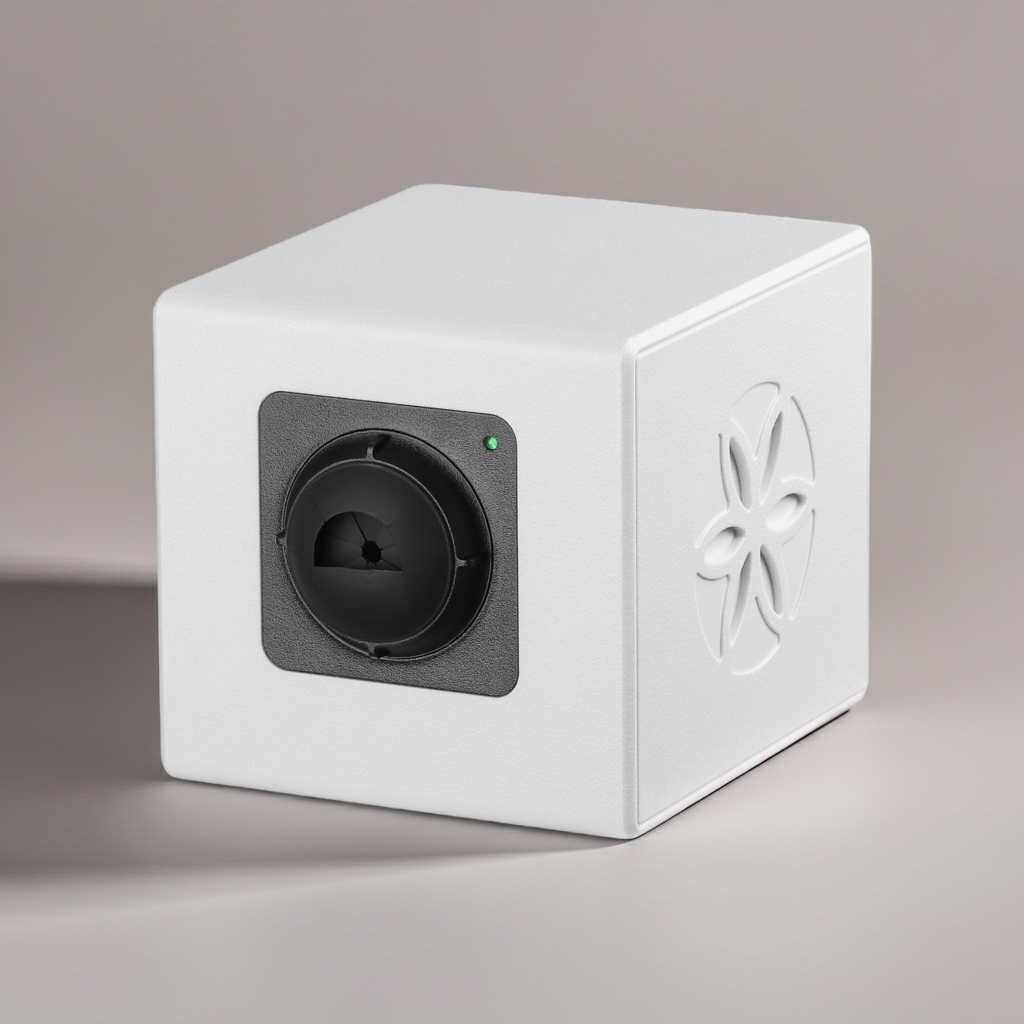
Bio-Well's Gas Discharge Visualization technology is currently the most widely published instrument specifically designed for biofield measurement. By applying a brief, controlled electric field to the fingertip and capturing the resulting photon and electron emission pattern, it produces a whole-body energy field map in under two minutes.
For biofield therapy practitioners, this creates something previously impossible: an objective before-and-after record of how a session affected the client's energetic state. The Principles of Bio-Well Analysis (Korotkov, 2024) describes the device's use as a research and monitoring tool — one that has accumulated over 200 published studies across medicine, sport, yoga, psychology, and environmental research.
Before & After Documentation
Scan before a session, scan after. The GDV parameters — area, intensity, symmetry, sector readings — provide an objective record of energetic change that can be shared with clients and used in practice documentation.
Whole-Body Energy Map
Ten finger readings map to major organ systems via meridian correlates, generating a full-body picture of energetic balance — not a single parameter, but a pattern. Particularly useful for identifying where intervention may be most needed.
Real-Time & Non-Invasive
A complete scan takes under 2 minutes. No needles, no electrodes, no preparation. The brief electric pulse is imperceptible. Suitable for routine use in any practitioner setting.
Research-Backed Foundation
The IUMAB database at iumab.club catalogs 200+ peer-reviewed studies using GDV/Bio-Well across yoga, meditation, medicine, sport, psychology, and environment — providing a scientific foundation for practitioner claims.
Three reasons to bring measurement into your practice
Bio-Well is a research and monitoring instrument, not a diagnostic device in the regulatory sense. The energy field map it produces reflects patterns that correlate with physiological state. It does not diagnose or treat. Its value in biofield therapy practice is as an objective measurement companion — giving both practitioner and client a shared, visual language for what the session achieved.
📚 Referenced & Cited Sources







Share:
How Do You Measure Energy in the Human Body? A Science-Based Guide to Every Method
15 Years of GDV Research: A Comprehensive Look at What the Scientific Literature Shows