
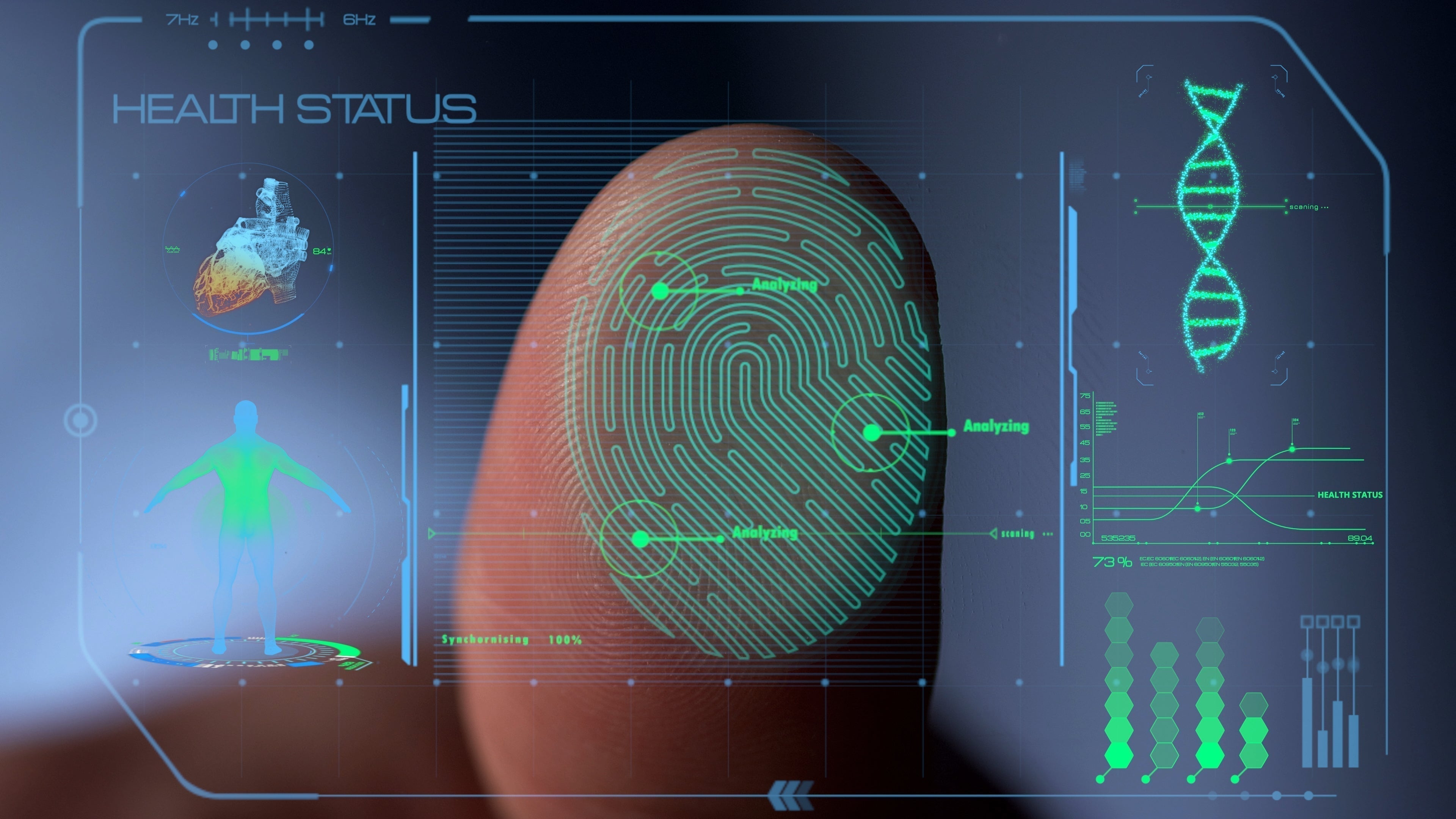
There's something happening at the surface of your skin that most diagnostic tools never see. A field of light. A signature. And according to a growing body of peer-reviewed research, that signature is talking — if you know how to listen.
The average person thinks about their immune system in two states: working, or not working. You get sick, you recover. Something in the middle gets labeled "stress" and filed away as something to manage later.
But immunity isn't a switch. It's a dynamic, continuously shifting system — regulated moment to moment by your nervous system, your endocrine glands, your sleep, your emotional state. And it turns out, some of that regulation is visible. Not with blood draws or lab panels. With light.
What Gas Discharge Visualization Actually Captures
In 1996, Professor Konstantin Korotkov developed what became known as Gas Discharge Visualization — GDV, or bioelectrography. The technique uses a weak, safe electrical stimulus applied to the fingertip to stimulate a biophotonic response: a corona discharge, photographed at high resolution and analyzed by software.
Each of the ten fingers maps to different organ systems and meridian pathways in the body. The resulting image — called a GDV gram or kirlianogram — captures area, shape, entropy, energy, and symmetry of that discharge field. Bio-Well is the modern consumer implementation of this technology.
For years the skeptic's question was reasonable: what does this actually correlate to in measurable biology? Not what should it correlate to according to traditional models — but what does the data actually show when you put it against hard lab markers?
A research team in Ukraine decided to find out. Over two rounds of testing, they observed 20 volunteers — measuring both their GDV parameters and their actual phagocytic immune function using laboratory analysis. The results were published in 2021 and deserve more attention than they've received.
What Phagocytosis Is — and Why It Matters Here
Phagocytosis is your immune system's first responder mechanism. Neutrophils — white blood cells — physically engulf and destroy bacteria and pathogens. The study measured four distinct markers: how many neutrophils were actively engaging bacteria (activity), how many bacteria each neutrophil captured (intensity), how thoroughly the bacteria were killed (completeness), and a combined bactericidal capacity score.
This isn't a soft wellness metric. This is front-line immune defense — the kind of function that determines how efficiently your body handles bacterial threats. The researchers were asking: does a biophotonic fingertip scan say anything meaningful about this?
What the Study Found
R=0.847
Overall canonical correlation between GDV and phagocytosis
71.7%
Of phagocytic variance explained by GDV parameters
6
Chakra energy markers significantly correlated with immune activity
The canonical correlation coefficient between GDV parameters and phagocytosis came in at R=0.847. That's a strong relationship by any statistical standard — the kind that doesn't emerge from noise. GDV parameters collectively explained 71.7% of the variance in phagocytic function.
In practical terms: the pattern of energy visible in a Bio-Well scan carries meaningful information about how robustly someone's immune cells are functioning at that moment.
The Chakra Connection — And Why Scientists Are Taking It Seriously
Here's where the study gets genuinely surprising. When the researchers broke down which GDV parameters were driving the immune correlation, the most significant were the energies of specific chakra zones — calculated from the fingertip discharge patterns in Bio-Well's software.
The fourth chakra energy score led the correlation with phagocytic activity. The sixth and seventh followed. In the Ayurvedic and traditional Chinese medical frameworks that Bio-Well's chakra mapping draws from, the fourth chakra is associated with the thymus gland, the vagus nerve, and cardiac regulation — all established players in immunomodulation. The seventh with the pineal gland, which regulates melatonin and has documented immune connections. The sixth with the pituitary, hypothalamus, and thalamus.
Worth noting
This isn't the researchers deciding that chakras matter. This is the data pointing — independently — to the same neuroendocrine pathways that conventional immunology has already identified as regulators of immune function. The traditional framework and the laboratory markers converge on the same anatomy.
That's a meaningful finding. The GDV scan isn't measuring something mystical and then hoping it correlates with biology. It appears to be capturing a functional signal from the nervous system's regulation of the immune response — expressed at the skin surface, readable with a fingertip photograph.
What This Means for How You Read Your Scan
If you use Bio-Well — or you're considering it — this study shifts the frame on what you're looking at. The scan has always been described as a window into your energy field. That framing is true, but it undersells what the research is showing.
A more precise description: you are looking at a functional snapshot of your neuroendocrine-immune system at the moment of measurement. The areas of the scan that appear coherent or fragmented, high-energy or depleted — they correspond, with statistical confidence, to the activity happening in your immune cells right now.
That changes the conversation around tracking. Not "my energy looks better this week" — but "my energy field looks better this week, and based on the research, my immune regulation likely reflects that."
It's still early science. The study was 20 participants, two measurement rounds, a specific Ukrainian clinical population. The researchers themselves are careful to say this suggests suitability of the method — not that it replaces clinical immune assessment. That intellectual honesty is part of why the finding is worth trusting.
Research reference: Babelyuk VY, Gozhenko AI, Dubkova GI, et al. Causal relationships between the parameters of gas discharge visualization and phagocytosis. Journal of Education, Health and Sport. 2021;11(6):268-276. DOI: 10.12775/JEHS.2021.11.06.029. This article is for educational purposes only and does not constitute medical advice.









Share:
15 Years of GDV Research: A Comprehensive Look at What the Scientific Literature Shows
The Immunity Scan: What Bio-Well Measures That Your Doctor Doesn't