
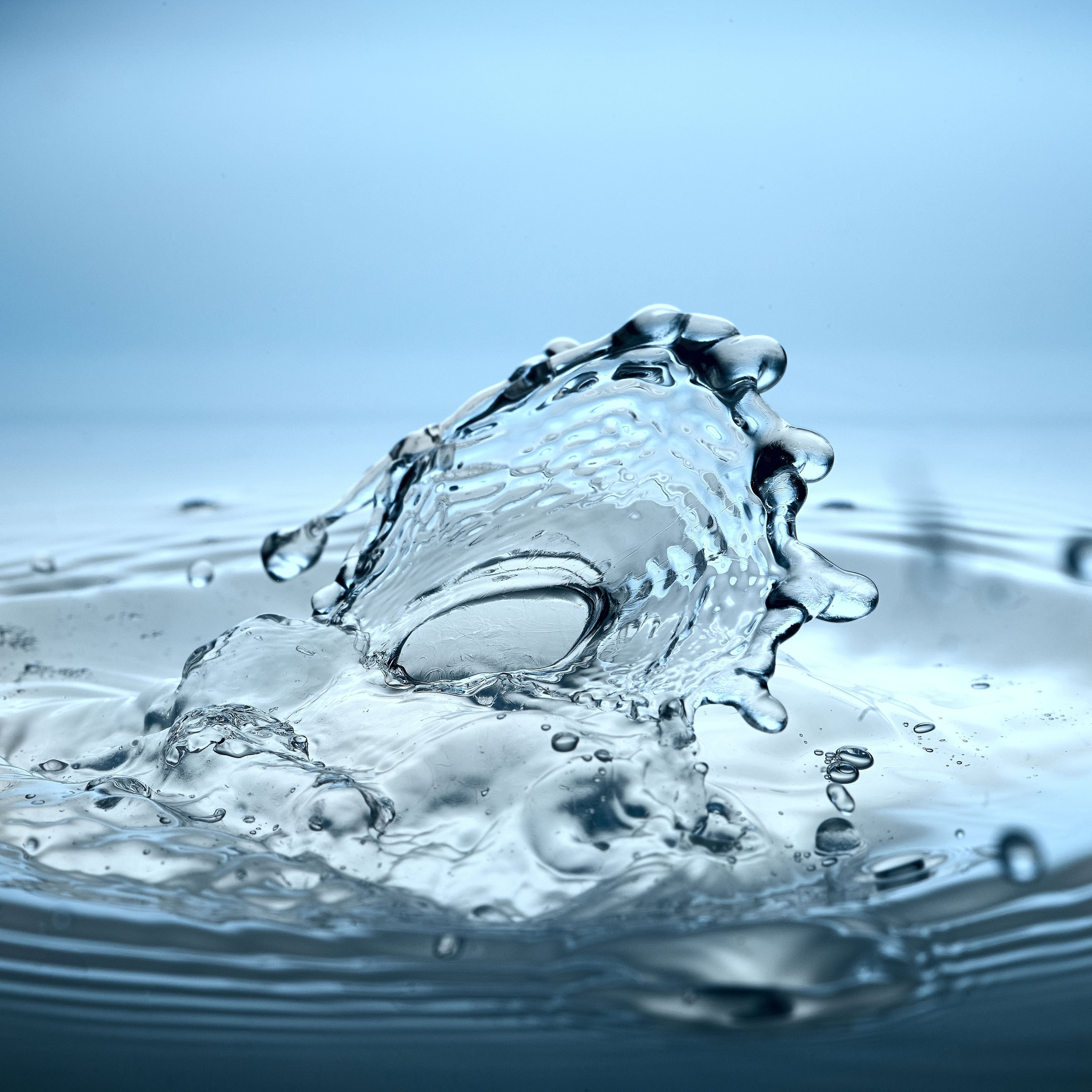
One hour. One meter. No physical contact. And the untreated water became treated water.
That sentence should bother you a little. It bothered the researchers too — they flagged it explicitly in the paper, reported it anyway, and called for replication. Because when your data shows something that challenges how you think the world works, the honest response isn't to hide it. It's to report it exactly as observed and invite scrutiny.
The study was published in March 2026 in the Journal of Applied Biotechnology and Bioengineering. The lead authors are from the Logos research institute in Russia, with co-authorship from Bio-Well LLC. The question they set out to answer was straightforward: can you detect the effects of magnetic field treatment on water using an objective measurement instrument — and do those effects translate into measurable biological changes?
The answer to both questions was yes, with statistical significance across every experiment. But the proximity effect — the finding that water placed near treated water acquired its properties without contact — was the result that nobody planned for.
What "Structured Water" Actually Means
Water is not simply H₂O molecules floating independently. In liquid form, water molecules are constantly forming and breaking hydrogen bonds with their neighbors — creating transient clusters and networks that are sensitive to temperature, pressure, electromagnetic fields, and dissolved substances.
Structured water — sometimes called magnetized water, coherent water, or activated water depending on the treatment method — refers to water whose molecular arrangement has been altered in a way that persists and produces measurable downstream effects. The concept has been studied seriously since at least the 1960s, when nuclear magnetic resonance evidence first suggested distinct water structures exist in muscle and brain tissue.
The challenge has never been whether such states exist — physics supports their existence. The challenge has been measuring them reliably and demonstrating that the changes matter biologically. This is precisely what this study addressed.
What the Research Record Already Showed
🐔 Chickens
600 Gauss magnetic water treatment. 50 chicks gained 200g more than controls over one month.
🐄 Dairy Cows
85 cows in Israel. Magnetized water increased daily milk yield by 1 liter per cow.
🌱 Crops
Australian greenhouse trials. Magnetic water increased celery yield 23%, beans 6-8%.
🦷 Humans
3-month trial. Magnetized water oral irrigator produced a 44% reduction in dental plaque.
The biological effects of magnetized water have been documented across dozens of studies spanning six decades and multiple species. What was missing was a rapid, reliable method for detecting whether a given sample of water had actually been meaningfully altered — one that didn't require a full biochemical analysis.
That's where Bio-Well Element entered the picture.
The Instrument That Could See the Difference
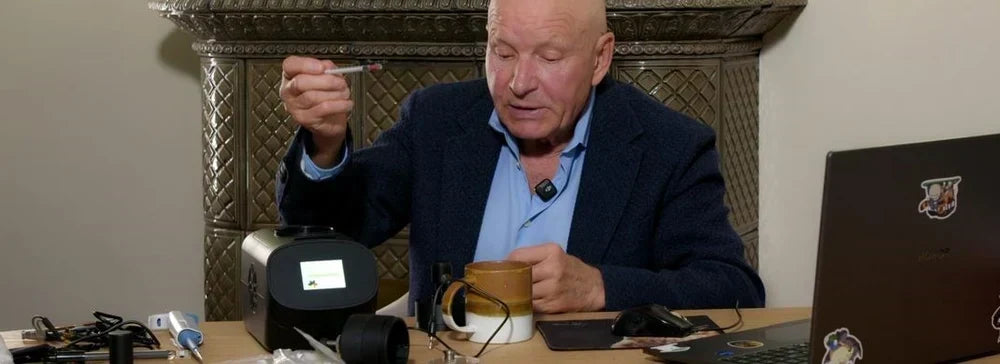
Bio-Well Element works by placing a drop of water on an electrode and stimulating it with a pulsed electromagnetic field. The resulting biophotonic discharge — the glow the water emits in response to that field — is captured by a high-resolution CCD camera and analyzed by software that extracts over 20 quantifiable parameters: area, energy, outer contour radius, number of petals in the discharge pattern, and more.
The key insight is that structurally different water produces visually and quantitatively different discharge patterns. This isn't a hypothesis — it's been demonstrated in a series of earlier studies by Korotkov and colleagues going back to 2001, and the new paper builds directly on that foundation.
The treated water produced larger, more energetic, more symmetrical discharge patterns — and crucially, did so with far greater consistency. The lower variability is itself a finding: structured water behaves more predictably than unstructured water, which suggests a more ordered molecular state.
These differences were reproducible across 100 total samples — 50 control, 50 treated — analyzed under identical conditions. Not a one-off. Not instrument noise. A stable, repeatable signal.
The Finding Nobody Expected
The yeast fermentation experiment was designed to test whether the biological activity of treated water differed from control water. It did — dramatically. Yeast foaming in treated water reached 20 cm in 4 hours. In control water, 8 cm. The treated water produced more than twice the fermentation activity.
Then the researchers did something that changed the experiment entirely. They placed a container of untreated water next to the treated water. Just proximity. No mixing. No physical contact.
The researchers didn't bury this finding. They reported it plainly, noted that it had never occurred under normal conditions, and identified it as something requiring further investigation. The paper doesn't overreach — it presents an observed, repeatable result and calls for replication.
This finding isn't isolated. Earlier work by Novikov and Yablokova (2022, 2024) demonstrated non-contact interactions between protein solutions and water in controlled magnetic fields. The idea that structured water can influence neighboring water through field effects rather than molecular mixing has a growing body of supporting literature — even if the mechanism remains incompletely understood.
Why This Changes the Conversation About Water
The conventional model of water is a neutral solvent — a delivery mechanism for nutrients, a temperature regulator, a biological medium. Identical regardless of its history. Characterized fully by its chemical composition.
What this and related research suggests is that water has states — molecular organizational patterns that persist, that can be transferred, that influence biological systems in measurable and reproducible ways. Two samples of chemically identical water can produce dramatically different biological outcomes depending on how that water has been treated.
That's not fringe physics. It's a research area with published, peer-reviewed work in journals across biophysics, agricultural science, veterinary medicine, and now biotechnology — with the 2026 paper adding a critical piece: a rapid, quantifiable measurement method that can verify the water's state in minutes, without chemical analysis.
One More Detail Worth Noting
The treated water was stored for 15 days in glass, plastic, transparent, and dark bottles. Its Bio-Well luminescence patterns did not change. Boiling it did not change the recorded properties. The structured state was stable — not a temporary artifact of the treatment process, but a persistent change in the water's measurable character.
The researchers themselves acknowledge this is preliminary. They call it an initial research stage. They're planning multicentre studies and clinical trials with volunteers. The honest framing is: the evidence is compelling, the findings are reproducible, the mechanism is not yet fully explained, and more rigorous work is underway.
That's exactly the right posture for frontier science. And it's exactly the kind of science worth paying attention to.
Research reference: Nefedov VI, Grabova IA, Lindinger MI, Korotkov KG. Evaluation of the effect of water treated with a magnetic field on the selected technical and biological systems. J Appl Biotechnol Bioeng. 2026;13(1):29–33. DOI: 10.15406/jabb.2026.13.00414. Funding disclosed: Defiance Brands, Inc., Nashville, TN, USA. This article is for educational purposes only and does not constitute medical advice.









Share:
Reading Your Energy Field as an Immune Marker
What Happened When We Gave Seeds Magnetized Water